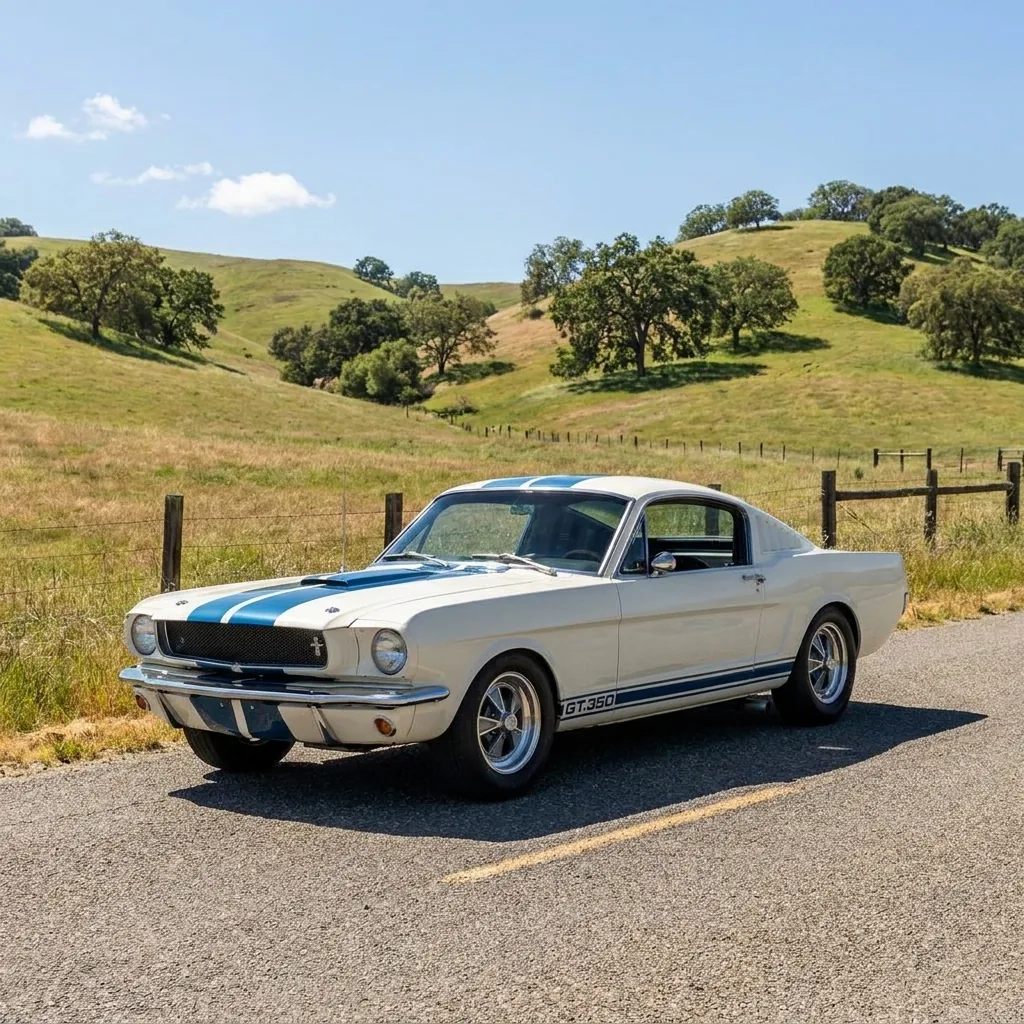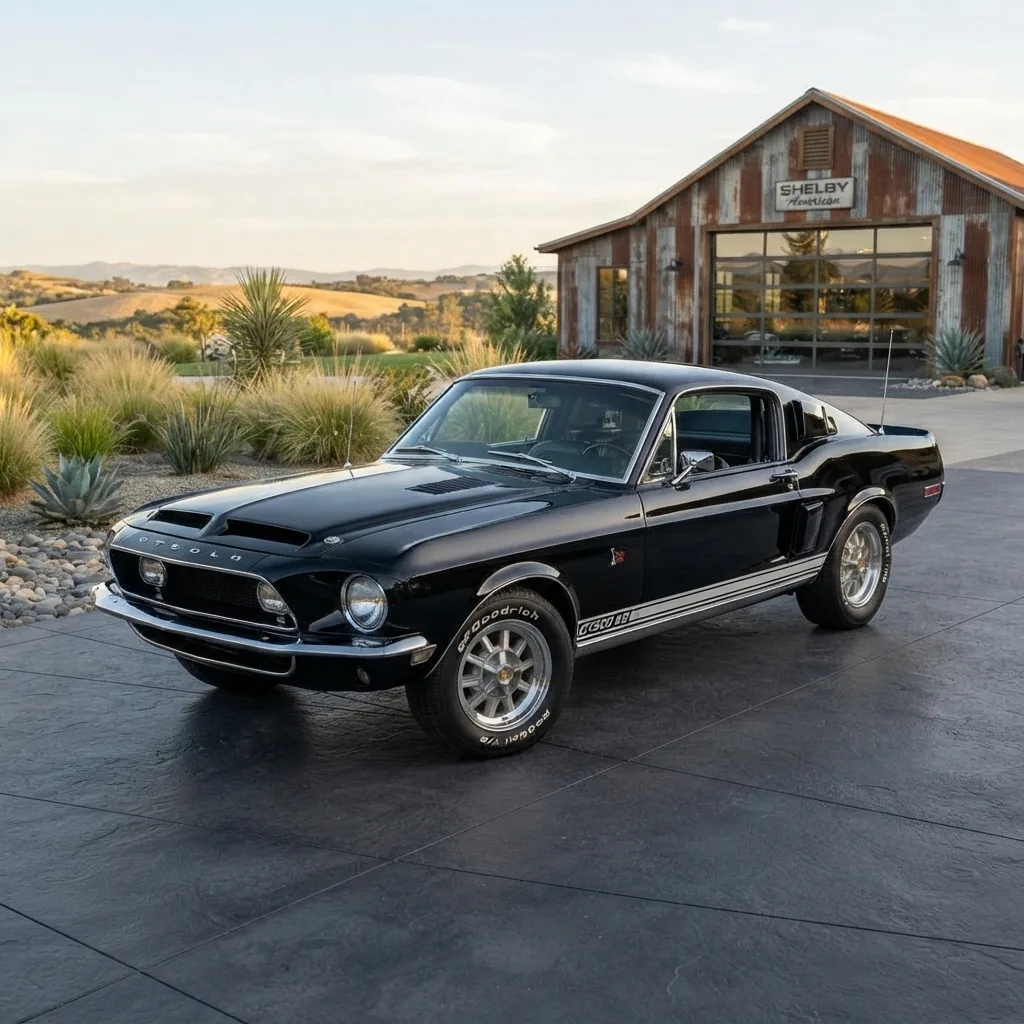
Two letters can hide a meaningful change. On the 1968 Shelby GT500KR, KR stood for King of the Road, but the name did more than add another claim to the bodywork. It identified the arrival of the 428 Cobra Jet in Shelby’s big-engined Mustang. The interesting part is that the engine’s nominal displacement remained familiar while the specification behind that number changed.
The Newport Car Museum identifies the GT500KR as a midyear development of the 1968 GT500 using the 428 Cobra Jet. The American Muscle Car Museum documents a surviving example with the period 335-horsepower rating. These references establish the key distinction: an early 1968 GT500 and a GT500KR should not be described as mechanically identical merely because both are associated with a 428 cubic inch engine. [1][2]
The displacement stayed familiar
Displacement tells us the total swept volume of an engine’s cylinders. It does not identify the cylinder heads, camshaft, induction, exhaust, or internal specification. Two engines with the same displacement can therefore have different performance characteristics and different intended uses. The GT500KR is a useful example because the familiar 428 number can conceal the significance of the Cobra Jet designation.
This is also why the car should not be explained as gaining a larger engine than every preceding GT500. The meaningful change was the particular engine version. A precise account names that version and its place in the model-year sequence. That approach gives readers a dependable way to distinguish related cars without relying on a simplistic bigger-number narrative that does not fit the actual history.
Cobra Jet described a coordinated specification
A performance engine version is an arrangement of compatible parts. Breathing capability, valve timing, fuel delivery, compression, and exhaust behavior all contribute to the result. Improving only one item may reveal a restriction elsewhere. The Cobra Jet name is therefore most useful when treated as an identifier for a complete specification, rather than a magical label that adds an undefined amount of power to any 428.
The same principle applies to a rebuilt engine today. An owner may install selected Cobra Jet-style components on another block or alter an original engine substantially. The result can be powerful and well-built, but its present configuration and its factory identity are separate facts. Describing both gives a more accurate account of the car. A famous engine name should help clarify what is installed, not substitute for knowing it.
The advertised horsepower number is easy to misuse
The GT500KR’s period rating is often described as conservative. That reputation has produced many alternative numbers, some based on specific tests and others repeated without clear measurement conditions. The correct first step is to report the factory figure as a period advertised rating. Any alternative should identify the tested engine, equipment, and method rather than being presented as a universal correction.
An engine tested with a different exhaust, ignition setup, or accessory load is not being measured under identical conditions. A chassis dynamometer adds drivetrain losses and other variables. These distinctions explain why several figures can circulate without all describing the same thing. The Cobra Jet’s significance does not depend on choosing the largest number. It rests on the engine’s documented place in the car and the performance-oriented combination it represented.
A big engine changes the kind of Mustang
The GT500KR occupied a different space from the earliest, more austere Shelby road-racing concept. Its big-engine identity and available equipment supported a broader road-car proposition. That does not make it less interesting. It means the intended experience should be described on its own terms rather than measured against an assumption that every Shelby had the same priorities.
A larger engine can provide substantial turning effort, but the complete vehicle determines how that effort is used. Mass, transmission, rear axle, tires, and suspension all contribute. A fastback and a convertible also bring different practical and structural contexts. The Newport collection’s examples illustrate the existence of both body forms. The KR name identifies a model specification, while body style and options help explain the individual car a viewer is actually looking at. [1]
Manual and automatic cars require individual context
The transmission affects launch behavior, gear changes, and cruising. A four-speed car makes the driver’s choices especially visible, while an automatic provides another route to using the engine’s output. The presence of a particular transmission should be checked against documentation rather than inferred from the model’s reputation. A performance badge does not mean every buyer selected the same equipment.
An auction record for a GT500KR equipped with a four-speed and air conditioning provides a useful reminder that high performance and comfort options could coexist. The exact combination belongs to the individual vehicle, not every KR. This is how specific documentation should be used: to establish an example and clarify the range of possibilities, without turning one car’s options into universal model facts. [3]
The name is memorable but the chronology matters
King of the Road is an effective phrase, but the engineering story depends on when the Cobra Jet-equipped model appeared. Midyear changes can create several related specifications within what looks like a single model year. A registration document stating 1968 does not by itself resolve which version is present. Build information and the car’s documented identity provide the necessary detail.
This also helps explain why two apparently conflicting descriptions can both be correct when they concern different points in production. The solution is not to choose whichever account sounds more exciting. It is to attach each specification to the appropriate version. For the GT500KR, that means keeping the KR designation connected to the Cobra Jet change rather than treating it as a decorative abbreviation available on every Shelby of the year.
Similar displacement can conceal different breathing
Imagine two engines with the same bore, stroke, and cylinder count. One has more restrictive ports and a milder camshaft, while the other has a combination intended to move more air at higher demand. Their displacement is identical, but their torque curves and peak output can differ. The example does not assign an exact improvement to the Cobra Jet; it explains why the familiar 428 number cannot settle the comparison.
This is a useful way to interpret the KR change without relying on rumors of hidden horsepower. The engine version identifies a set of parts and calibrations within a known displacement. The car’s significance comes from receiving that version, not from changing the arithmetic of cylinder volume. Once the distinction is understood, the suffix becomes a meaningful technical clue rather than just another layer of performance branding.
What to remember when you see the badge
The most useful question is what changed beneath a familiar displacement. The answer leads directly to the engine specification and then to the rest of the vehicle around it. That sequence is more informative than a list of auction results or an unsupported claim about hidden horsepower. It explains why the letters matter mechanically.
The GT500KR remains a strong Car Secrets subject because it rewards close reading. The body announces Shelby, the engine size sounds familiar, and the small KR suffix identifies a more specific chapter. Understanding that chapter shows how a manufacturer can change a car’s performance identity without increasing the number of cubic inches. The secret is not the size of the engine alone, but the particular version that those two letters tell you to look for.