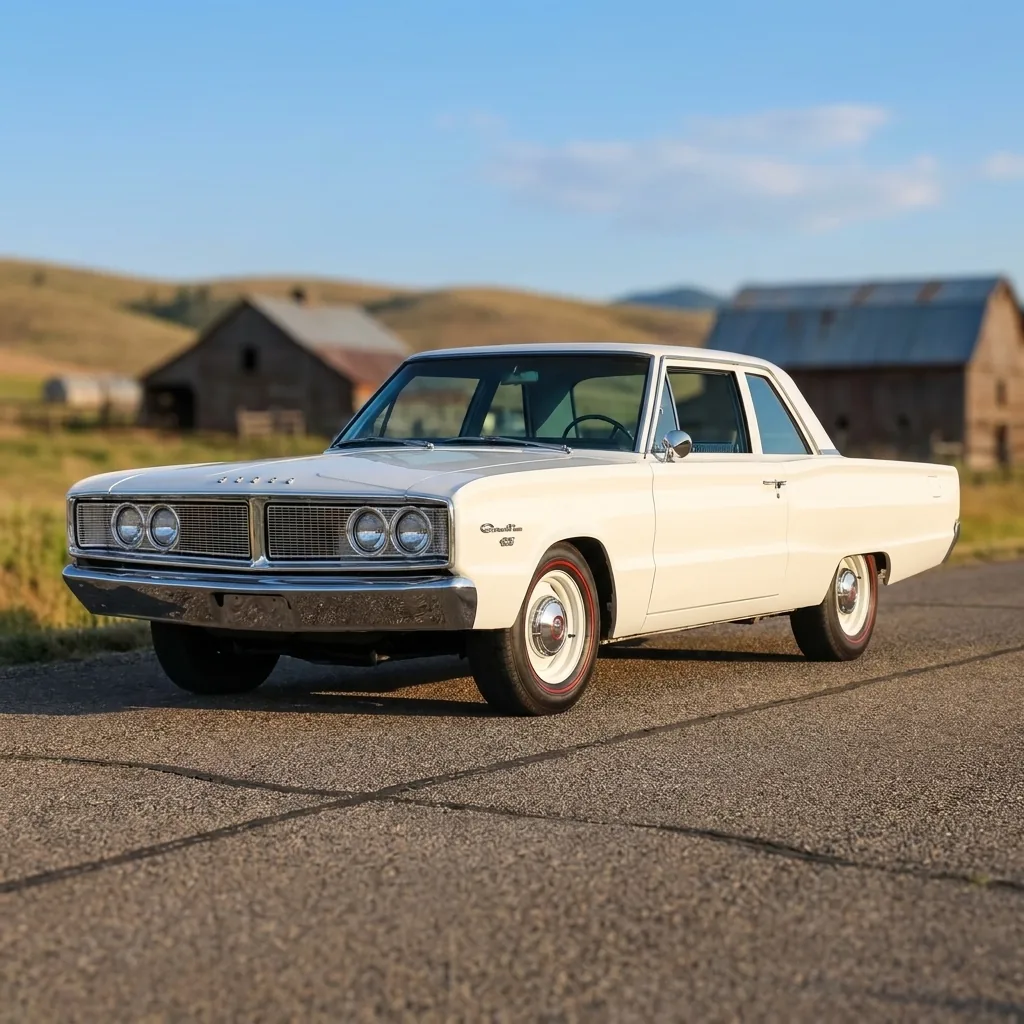
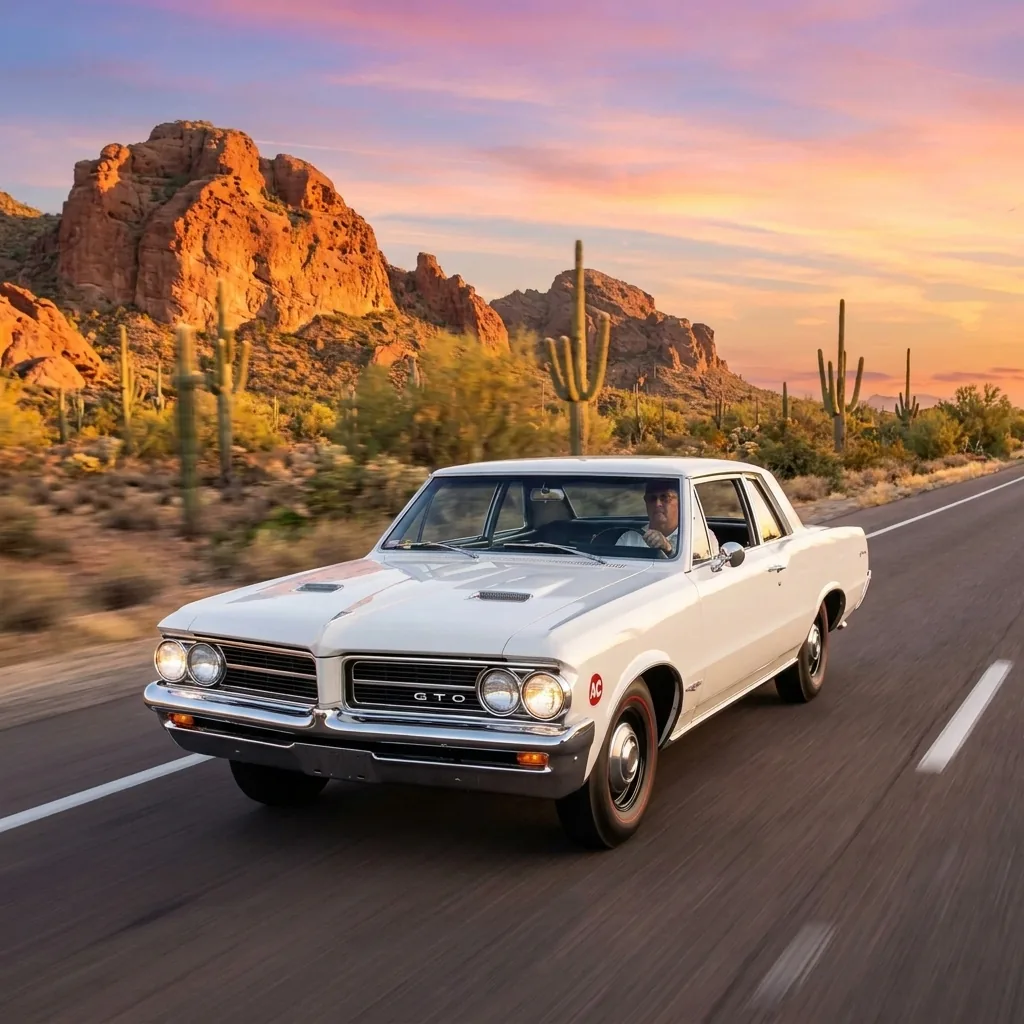
A hood that lifts off completely changes the ritual of opening an engine bay. On the 1969 A12 Dodge Super Bee and Plymouth Road Runner, the lightweight hood was one of the clearest signs that the package had a different set of priorities from an ordinary street model. Beneath it was a 440 cubic inch V8 with three two-barrel carburetors. The visual effect was dramatic, but the hardware deserves a more precise explanation than the familiar phrase six pack suggests.
Dodge’s historical reporting identifies the A12 cars as the 1969 440 Six Pack Super Bee and 440 Six Barrel Road Runner. These names reflect brand usage for the same general three-carburetor concept. The A12 package is associated with the fiberglass lift-off hood and a particularly focused drivetrain specification. It should be separated from later cars that also used a three-carburetor 440 but did not reproduce every feature of the 1969 package. [1][2]
Six barrels did not mean six carburetors
Each of the three carburetors has two airflow barrels. The Six Pack name refers to the total number of barrels, not the number of separate carburetors. This is a small distinction, but it makes the system much easier to visualize. The carburetors share the task of feeding one V8 through a common manifold, with their operation coordinated to suit changing engine demand.
At modest loads, the engine requires only part of the system’s maximum capacity. The center carburetor handles normal operation in the factory arrangement, while the outboard units provide additional airflow when the system calls for it. Their operation must be described according to the actual linkage and vacuum controls fitted. Later modifications can change that behavior. A surviving car with three carburetors therefore needs more inspection than a count of the air-cleaner openings. [3]
Why the hood was removable
A removable fiberglass hood supports a different balance of weight, access, and convenience from a conventional hinged steel panel. The material and attachment arrangement can reduce mass and expose the engine bay without the same hinge structure. The owner then has to handle and place the removed panel safely. That is a reasonable compromise for a focused performance package, but it is less convenient during casual roadside checks or bad weather.
The hood also carried the scoop that made the A12 cars instantly recognizable. Its function depended on the relationship between outside air and the engine’s induction system. A scoop is not independent of the air cleaner, sealing, and surrounding pressure conditions. The removable panel and the three-carburetor installation should therefore be understood together. The body feature advertised the mechanical package while also serving the practical requirements of that package.
A large engine still needs the right gear ratios
The 440 supplied a substantial displacement foundation, but the drivetrain determined how its output reached the road. A performance-oriented rear axle ratio can increase torque multiplication and keep the engine working in a useful range during acceleration. It also raises cruising engine speed for a given tire size and transmission gear. That tradeoff is part of the reason an acceleration-focused package can feel more demanding on an ordinary highway trip.
The A12’s well-known 4.10 axle ratio belongs in that context. It should not be treated as a mysterious speed multiplier with no cost. The gearing supports a particular kind of performance while influencing noise, fuel consumption, and sustained engine speed. Tires and traction remain limiting factors. Even a powerful engine with favorable gearing cannot accelerate effectively if the driven tires are overwhelmed at the start. [2]
Six Pack and Hemi offered different propositions
The 440 three-carburetor package and the 426 Hemi occupied related performance territory, but they used different engine architectures and induction arrangements. The Six Pack engine was not a smaller Hemi, and adding carburetors did not turn its wedge-type cylinder heads into Hemi heads. Comparing them begins with those mechanical differences before moving to cost, use, or period test results.
Their reputations can tempt enthusiasts to declare a universal winner. The useful comparison is more specific. Which cars, transmissions, axle ratios, tires, and conditions are involved? Is the question acceleration, service access, ordinary driving, or historical significance? Different criteria can favor different combinations. The A12’s appeal does not depend on defeating the Hemi in every imagined contest. Its own package is distinctive enough to justify attention without borrowing another engine’s identity.
The plain wheels belong to the visual story
The A12 cars are strongly associated with an intentionally purposeful appearance, including plain steel wheels rather than a presentation built around decorative wheel covers. This helped reinforce the package’s concentrated character. Yet the visual choices should be read alongside the hardware, not used as proof that any car with a black hood and simple wheels is an original A12. Those details are reproducible. [2]
The model’s popularity has inspired many recreations. A tribute can accurately demonstrate how the induction arrangement looks and how a removable hood is handled, while still having a different production history. Documentation establishes what the vehicle originally was. Inspection establishes its current configuration. Keeping those questions separate allows the car to be appreciated honestly and prevents a visually convincing restoration from being treated as its own historical evidence.
The removable hood changes routine access
With a conventional hood, hinges guide the panel and keep it attached to the car. A lift-off panel requires the person opening it to manage the entire piece and choose a secure place to put it. Wind, limited space, or a hot engine bay can make that task less convenient than the familiar hinged arrangement. The difference is a direct consequence of the chosen design.
For an A12 owner, the unusual access method becomes part of the car’s character. It also helps explain why a manufacturer would not apply the same solution to every road model. A performance-focused customer might accept the extra handling in exchange for the package’s priorities, while an ordinary commuter might not. The hood is therefore a visible record of a product decision about which inconveniences the intended buyer was expected to tolerate.
What the A12 package explains about its era
The A12 cars show how manufacturers could offer a highly focused performance combination within an otherwise familiar model range. The hood, induction, gearing, and exterior details were not random additions. They expressed a set of priorities that placed acceleration and mechanical purpose ahead of some everyday conveniences. The resulting compromises are part of the attraction because they make the intended use so visible.
The next time the enormous scoop attracts your attention, look at how the rest of the car supports it. Three carburetors form one coordinated intake system. A removable hood changes weight and access. The rear axle shapes the engine’s work at the wheels. Together, those choices explain why A12 means more than a styling package. Its secret is the consistency of the combination: several ordinary engineering decisions were aligned around an unusually direct performance goal.